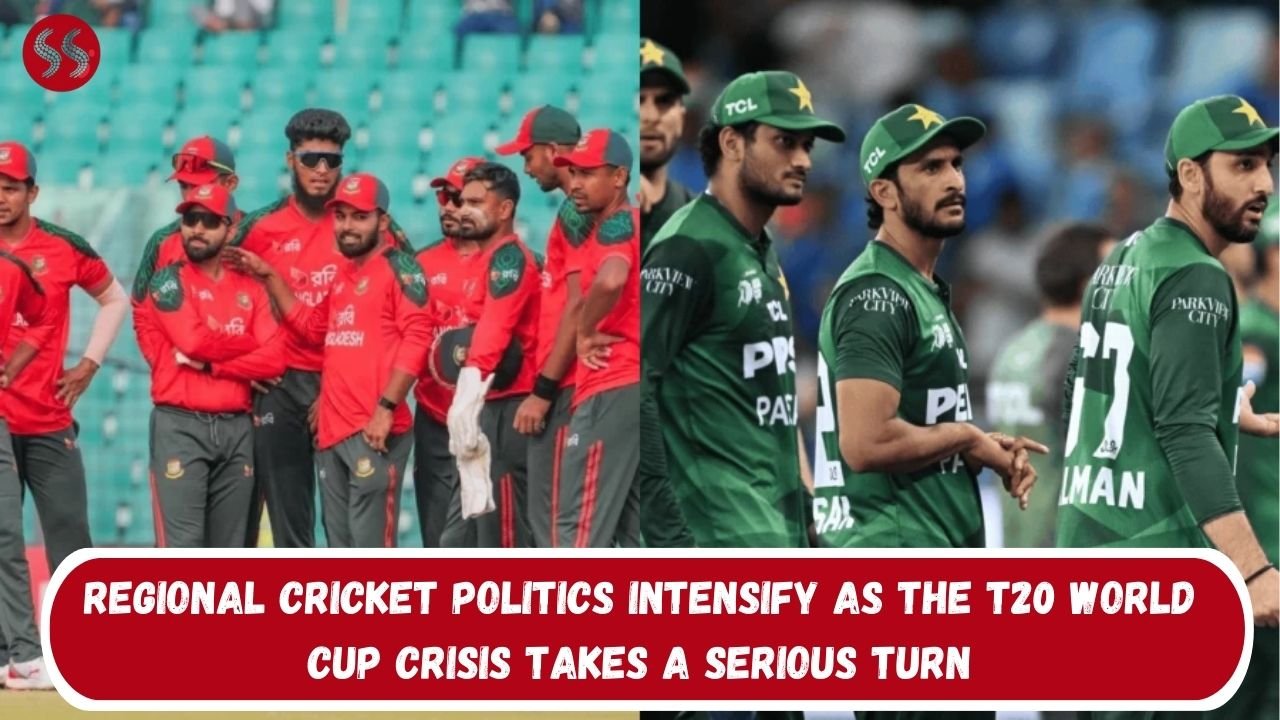

The standoff surrounding Bangladesh’s participation in the global event has taken a new turn, with regional cricket politics now firmly in focus. The ongoing T20 World Cup crisis has drawn in multiple cricket boards, intensifying debate over security, scheduling, and governance. As the ICC weighs its options, the T20 World Cup crisis highlights how political tensions can disrupt major tournaments, placing player safety, international relations, and cricketing unity under serious strain.
PCB backs Bangladesh amid T20 World Cup crisis
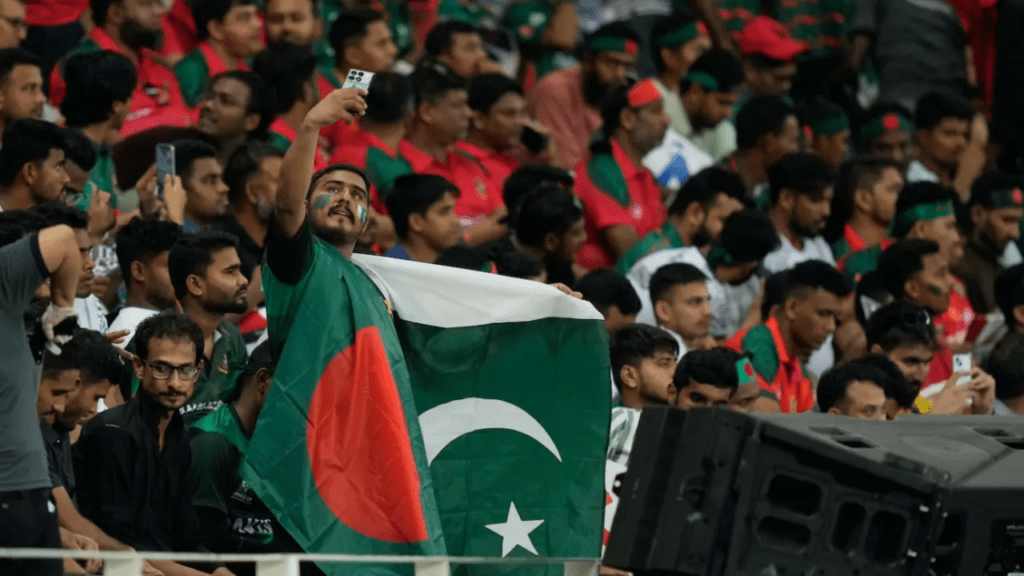
The ongoing T20 World Cup crisis escalated further on Tuesday after the Pakistan Cricket Board (PCB) formally wrote to the International Cricket Council (ICC), expressing support for Bangladesh’s refusal to play its scheduled matches in India. The PCB’s letter, which was also shared with ICC Board members, cited political instability and security concerns in the region as justification for backing the Bangladesh Cricket Board’s (BCB) stance. At the heart of the T20 World Cup crisis is Bangladesh’s demand that its group-stage matches be shifted to Sri Lanka, a co-host of the tournament.
The ICC is expected to hold a crucial Board meeting on Wednesday to take a final call on Bangladesh’s participation, with the tournament less than three weeks away. Despite mounting pressure, the governing body has so far maintained that the schedule will not be altered.
Mustafizur Rahman episode deepens the dispute
The PCB’s move has added another layer to the T20 World Cup crisis, which began earlier this month when the Board of Control for Cricket in India (BCCI) instructed Kolkata Knight Riders to release Bangladesh pacer Mustafizur Rahman from their IPL 2026 squad. While the reasons were never fully clarified, worsening political relations between India and Bangladesh were widely cited. This development prompted the Bangladesh government to publicly declare that the national team would not travel to India.
Since then, analysts believe the T20 World Cup crisis has moved beyond cricketing logistics into a broader diplomatic issue. The ICC and BCB have held multiple meetings, including high-level talks in Dhaka last weekend, but neither side has softened its position. January 21 had been set as a deadline for a decision.
ICC faces pressure as deadline nears
With the ICC Board meeting looming, the T20 World Cup crisis has placed administrators in a difficult position. Any late venue change would pose logistical challenges involving travel, broadcasting, and commercial commitments. The ICC has reiterated that Bangladesh must play in India as scheduled, while the BCB, backed by its government, insists it cannot guarantee player safety.
The T20 World Cup crisis has already had ripple effects, including unrest within Bangladesh’s domestic circuit and concerns over potential boycotts. If unresolved, the T20 World Cup crisis could strain future bilateral and multilateral relations in international cricket. Many fear the T20 World Cup crisis could set a precedent for political disputes influencing global tournaments, making it vital that the T20 World Cup crisis is resolved swiftly and decisively.
READ MORE: