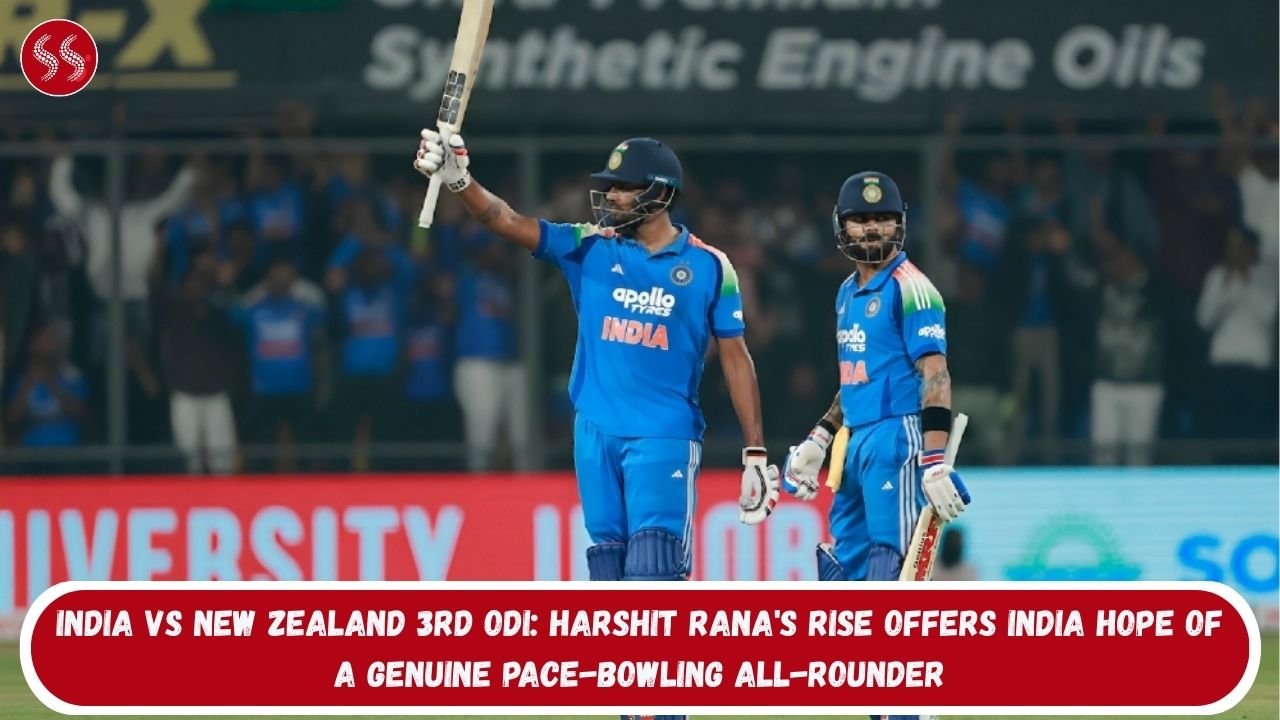

India’s 1–2 ODI series defeat at home may have hurt, but the India vs New Zealand 3rd ODI contest also revealed a promising silver lining. In a series where results went against the hosts, young pacer Harshit Rana emerged as an unexpected beacon of hope, showcasing skills that could shape India’s planning for the 2027 ODI World Cup in South Africa.
The final match in Indore summed up the series narrative of India vs New Zealand — moments of individual brilliance amid collective disappointment. While New Zealand sealed a historic series win, India’s selectors and team management were left encouraged by the development of players who could add balance to the squad in challenging overseas conditions.
Harshit Rana’s batting sparks optimism
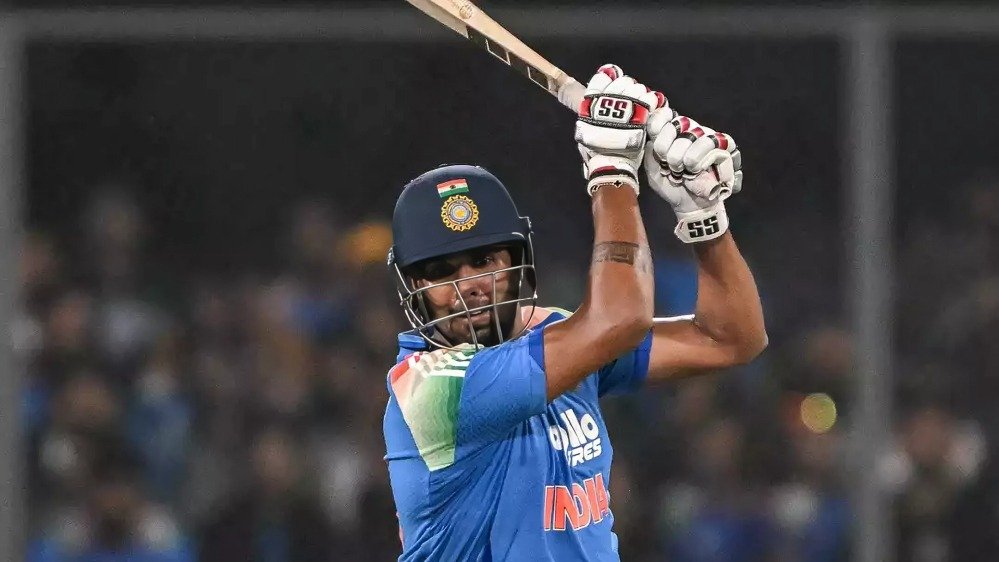
Among the biggest positives from India vs New Zealand was Harshit Rana’s transformation with the bat. Batting at No. 8 under intense pressure, the young seamer struck a fluent 52 off 43 balls, peppered with four fours and four sixes. For a side chasing a stiff target after a top-order collapse, Rana’s counterattacking innings briefly put New Zealand on the back foot.
This was not an isolated effort. Rana had already impressed with a vital cameo earlier in the India vs New Zealand series, hinting at a skill set that goes beyond fast bowling. His ability to clear the ropes and rotate strike late in the innings is precisely what modern ODI teams value, especially on quicker surfaces where depth in batting becomes crucial.
Captain Shubman Gill was quick to highlight Rana’s importance after the match, noting how teams across the world now bat deep. In the context of India vs New Zealand, Rana’s contributions stood out because they came when India desperately needed momentum.
Balancing the XI for overseas conditions
One of the major takeaways from India vs New Zealand has been India’s continued search for the right team balance. At home, spin-heavy all-rounders like Ravindra Jadeja, Axar Patel and Washington Sundar provide control and batting depth. However, conditions in South Africa during the next World Cup are expected to favour pace, bounce and seam movement.
That is where the lessons from India vs New Zealand become significant. A fast-bowling all-rounder allows India to field five specialist batters without compromising bowling strength. Rana’s emergence, along with Nitish Kumar Reddy’s steady progress, gives India options beyond the injury-prone Hardik Pandya.
Rana’s bowling also showed promise during the India vs New Zealand series. He struck early with the new ball in Indore and used slower deliveries effectively in Vadodara. While he is still learning how to maintain effectiveness with an older ball, his adaptability suggests room for growth at the highest level.
Looking ahead after the series loss
Despite the disappointment of losing a home series, India vs New Zealand served as a timely reminder that rebuilding and refinement are ongoing processes. Virat Kohli’s sublime century reaffirmed his class, but it was the emergence of younger players that offered long-term reassurance.
Criticism has followed Rana due to perceptions of favouritism, but performances in India vs New Zealand have strengthened his case on merit. If nurtured correctly, his dual skills could be invaluable in conditions where pace dominates and batting depth decides outcomes.
As India look beyond the immediate setback of India vs New Zealand, the focus will shift to developing versatile cricketers who can perform under pressure. Harshit Rana may still be raw, but his impact in this series suggests India could be closer to finding the genuine pace-bowling all-rounder they have long sought.
ALSO READ: