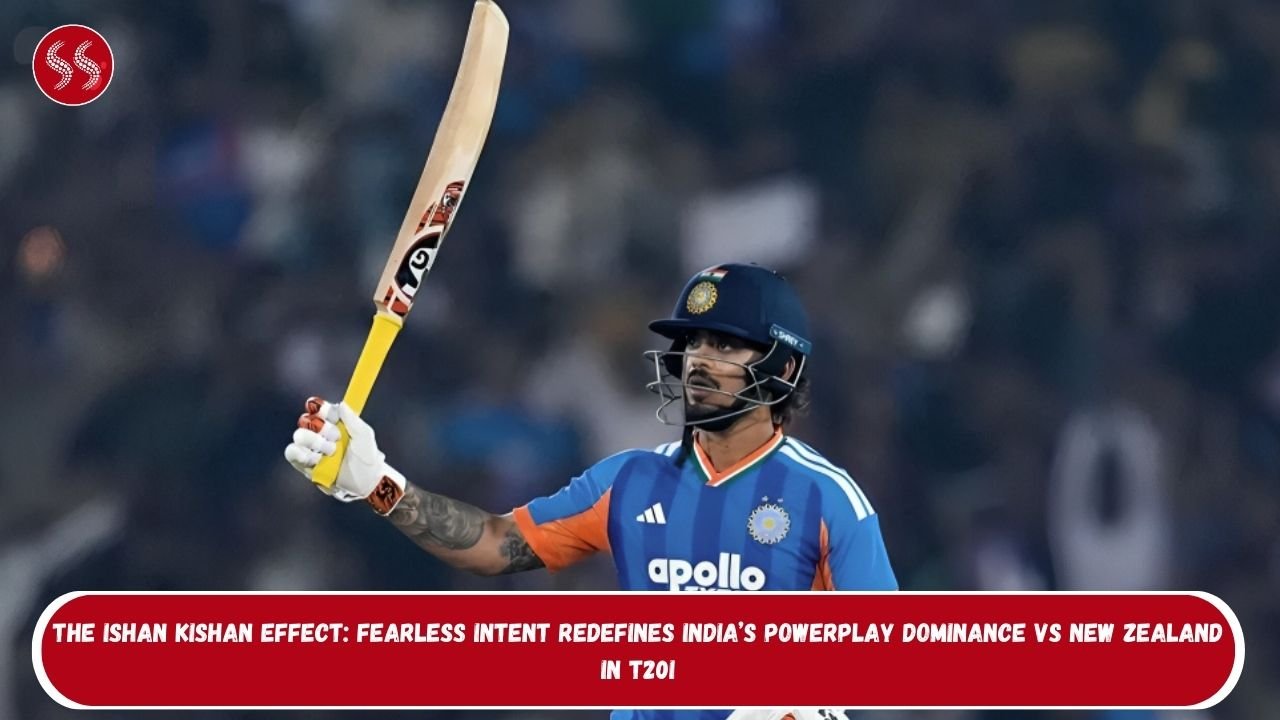

India’s command over the ongoing T20I series against New Zealand has been driven by a clear tactical shift, best described as the Ishan Kishan effect. Rather than panicking after early wickets, India have leaned into aggression, turning moments of vulnerability into windows of dominance.
Turning Early Setbacks into Powerplay Control
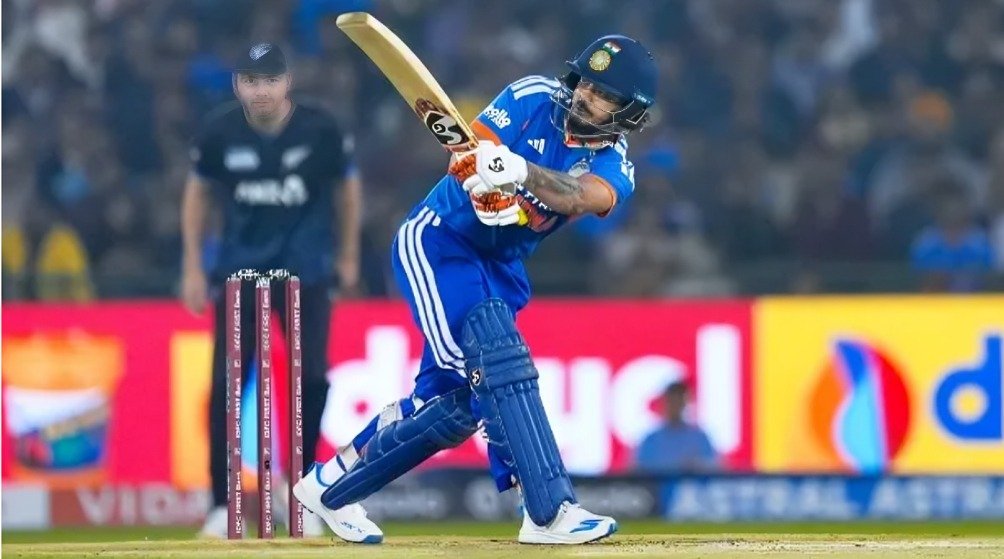
The clearest example of the Ishan Kishan effect came in the third T20I at Guwahati, when Sanju Samson fell to the very first ball. What usually signals pressure instead became a launchpad. Kishan absorbed responsibility immediately, facing 13 of the next 19 balls and shielding Abhishek Sharma as India raced to a record-breaking team fifty.
This approach mirrored his brilliance in the second T20I at Raipur, where India were rattled at 6/2 while chasing 209. Instead of consolidation, the Ishan Kishan effect took over. Kishan attacked relentlessly, scoring 56 runs in the powerplay alone and propelling India to 75/2 by the end of six overs, effectively neutralising New Zealand’s early breakthroughs.
Intent Over Caution Defines Kishan’s Role
Batting at number three, Kishan has brought a clarity of purpose that embodies the Ishan Kishan effect. While Tilak Varma’s role is to stabilise, Kishan’s mandate has been momentum. His strike rate across his first two deliveries consistently hovering above 200 highlights a mindset designed to dominate bowlers before they can settle.
This aggressive intent has repeatedly disrupted New Zealand’s plans. Even when wickets fall, the Ishan Kishan effect ensures the scoring rate never stalls, keeping the opposition under constant pressure during the most crucial phase of the innings.
Impact Beyond the Scorecard
The ripple effects of the Ishan Kishan effect extend beyond powerplay numbers. By slashing the required run rate early, Kishan has given batters like Suryakumar Yadav the freedom to play risk-free cricket later in the chase. In Guwahati, Surya’s unbeaten 57 came with minimal pressure, a direct result of the early onslaught.
Captain Suryakumar Yadav himself acknowledged the Ishan Kishan effect, calling Kishan’s Raipur innings one of the most audacious displays he had witnessed under pressure. With India breaking their own record for the fastest team fifty in T20Is, reaching the mark in just 3.1 overs, the Ishan Kishan effect is no longer a momentary spark—it has become a defining feature of India’s T20 blueprint.
As the series unfolds, the Ishan Kishan effect continues to reshape how India approach adversity, turning early damage into decisive dominance.
SEE MORE: