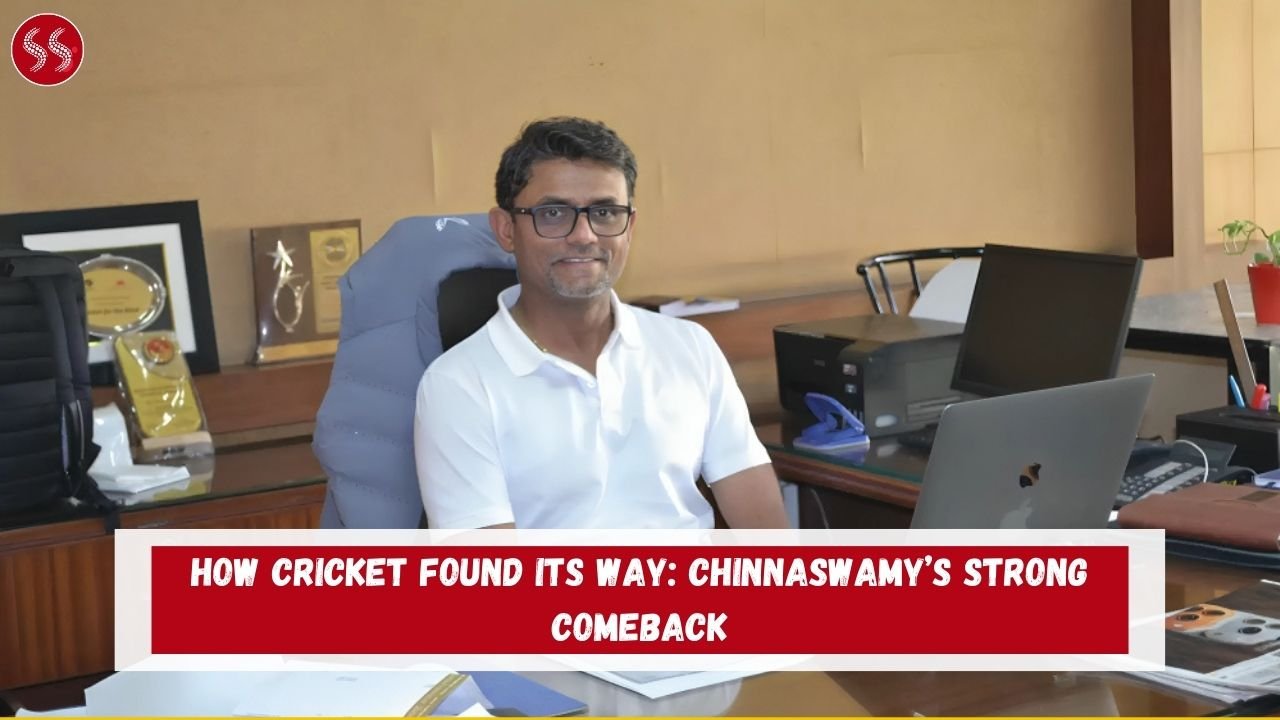

How cricket found its way After months of uncertainty and concern, international cricket is finally set to return to Bengaluru’s iconic M. Chinnaswamy Stadium. The journey back has not been easy, following a tragic stampede incident that forced matches to be moved away from the venue. This period raised serious questions about crowd safety, infrastructure, and event management. What followed was a detailed review process involving the Karnataka government, law enforcement agencies, and cricket authorities. This is the story of How cricket found its way back to Chinnaswamy through reforms, coordination, and a renewed focus on safety.
Government Clearance and the Road to Approval

The Karnataka government recently gave conditional approval for matches to resume at the Chinnaswamy Stadium, marking a crucial step in How cricket found its way back to one of India’s most famous grounds. According to KSCA vice-president Sujith Somasunder, the process began with direct engagement with key decision-makers, including the Chief Minister, Deputy Chief Minister, and Home Minister.
The state authorities were receptive to discussions and stressed the importance of safety and preparedness. A major part of How cricket found its way forward involved implementing the recommendations of the Justice John Michael Cunha Committee. These recommendations focused on fixing structural gaps, improving crowd flow, and strengthening emergency preparedness.
Engineers were appointed, infrastructure work was initiated, and constant coordination was maintained with civic bodies such as the police, fire services, power supply, and municipal authorities. At the same time, approval from the BCCI was essential, as it governs international fixtures. Once government backing was in place, the BCCI was ready to restore Chinnaswamy as an international venue. This collective effort clearly explains How cricket found its way back through dialogue and accountability.
Safety Measures, Smart Stadium Vision, and Fan Trust
A major lesson from the past incident was the need for better safety systems, which is central to How cricket found its way back responsibly. Several changes have now been mandated. Stadium gates must meet specific size requirements, and holding areas have been created for smoother entry checks. Medical preparedness has been strengthened with mandatory ambulances, clear access routes, and improved fire safety systems, including dedicated water storage.
Parking and crowd movement remain challenges due to space constraints, so fans will be encouraged to use public transport like Metro and buses. Educating spectators on entry points, permitted items, and seating details is another key pillar in How cricket found its way to regain public confidence.
Leadership also played a vital role. KSCA president Venkatesh Prasad led discussions with government and law enforcement agencies, supported by experienced office-bearers. Their collective effort ensured that responsibility was clearly defined, especially distinguishing between venue management and event organisation.
Looking ahead, KSCA plans to transform Chinnaswamy into a “smart stadium” using AI-enabled cameras and real-time monitoring systems. This technological upgrade is another example of How cricket found its way into a safer and more controlled environment. Social media, public announcements, and phased ticketed events with smaller crowds will further help rebuild trust.
In summary, How cricket found its way back to Chinnaswamy is a story of learning from mistakes, prioritising safety over convenience, and committing to world-class standards so fans can once again enjoy cricket with confidence.
SEE MORE: