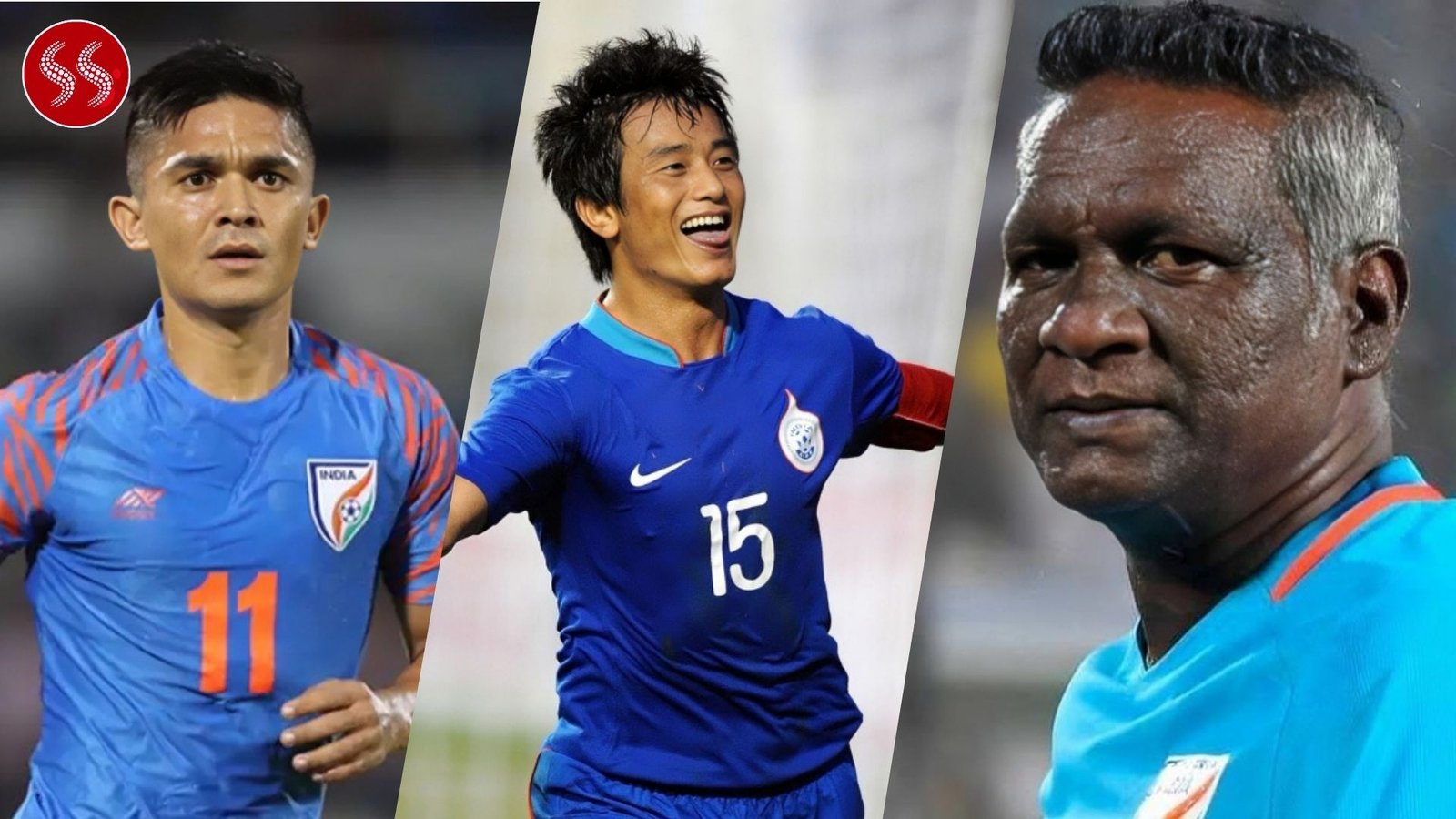

Indian football has produced several generations of players who transformed the sport through their skill, leadership and achievements. From the golden generation of the 1950s and 1960s to modern icons such as Sunil Chhetri and Bhaichung Bhutia, these players helped build Indian football’s identity. India’s historic achievements include the 1956 Olympic fourth-place finish, the 1962 Asian Games gold medal and the 1964 AFC Asian Cup runners-up finish.
For this Top 10 Indian Football Legends Who Shaped the Sport list, the focus is on overall influence, international achievements, longevity and contribution to Indian football—not simply goals or appearances.
1. Sunil Chhetri
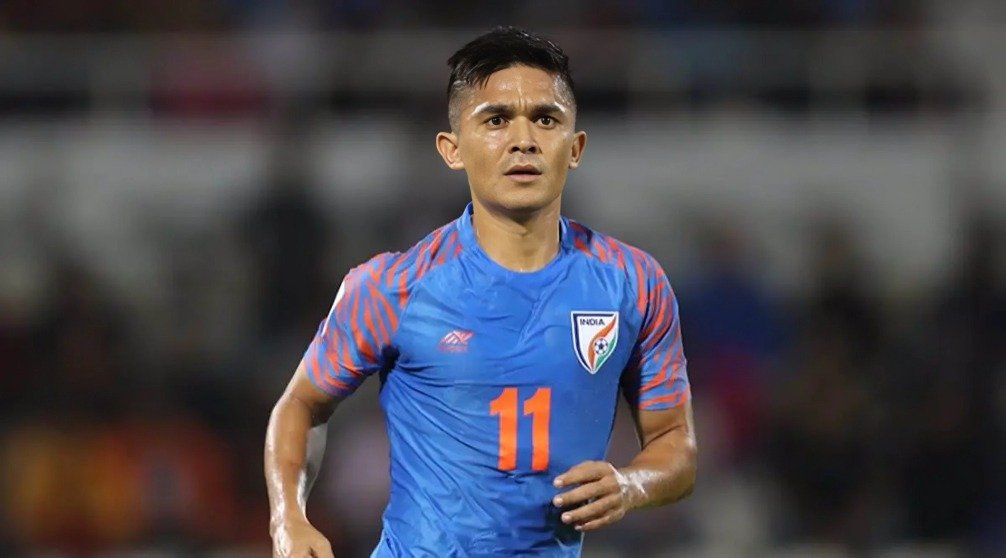
Sunil Chhetri, one of the greatest Indian Football Legends Who Shaped the Sport, built an extraordinary career through his goalscoring, consistency and leadership. He made 376 club appearances and scored 160 goals, while representing India 151 times and scoring 94 international goals.
Chhetri played a central role in India’s international campaigns, including the 2008 AFC Challenge Cup victory that helped India return to the AFC Asian Cup after 24 years. AIFF also highlights his role in India’s later SAFF and Nehru Cup successes.
His influence went beyond the pitch. Chhetri became an ambassador for Indian football and inspired a new generation to follow the sport.
ALSO READ:
2. P.K. Banerjee
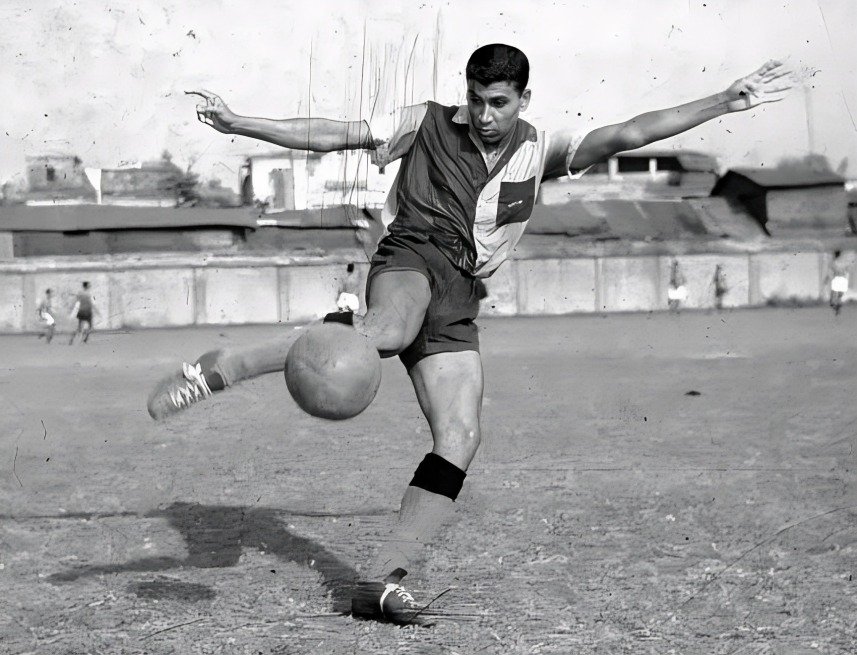
P.K. Banerjee stands among the greatest Indian Football Legends Who Shaped the Sport, playing a central role in India’s golden generation. His performances helped India achieve historic success, including the 1962 Asian Games gold medal.
Banerjee was also instrumental in India’s famous 1962 Asian Games triumph. In the final against South Korea, he scored India’s opening goal before Jarnail Singh added the second.
His contribution continued after his playing career, when he became an influential coach and mentor.
3. Chuni Goswami
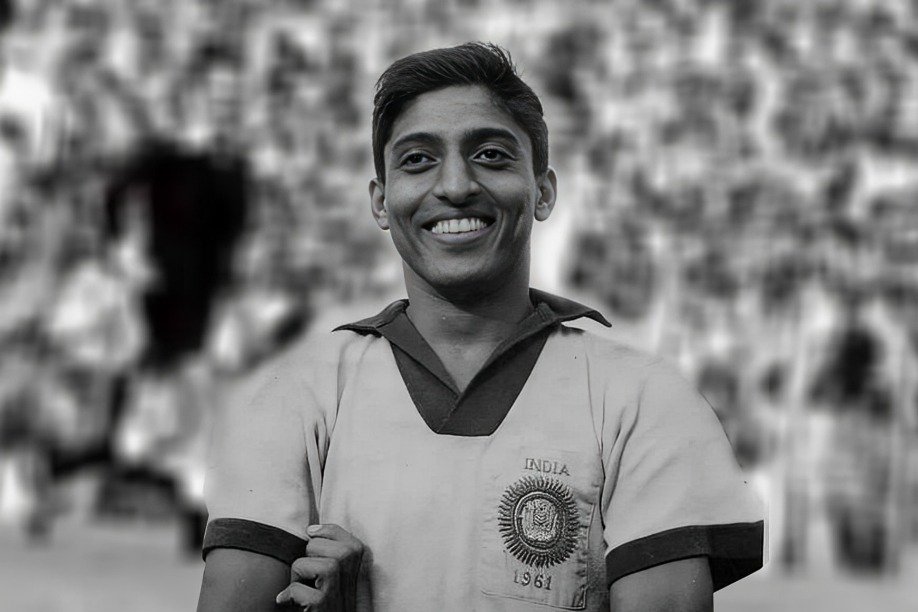
Chuni Goswami remains one of the most celebrated Indian Football Legends Who Shaped the Sport, remembered for his exceptional technique and leadership. He captained India to the famous 1962 Asian Games football gold medal.
As captain, he led India to the 1962 Asian Games gold medal, with India defeating South Korea 2–1 in the final.
India also finished runners-up at the 1964 AFC Asian Cup, another major achievement from the same generation.
4. Bhaichung Bhutia
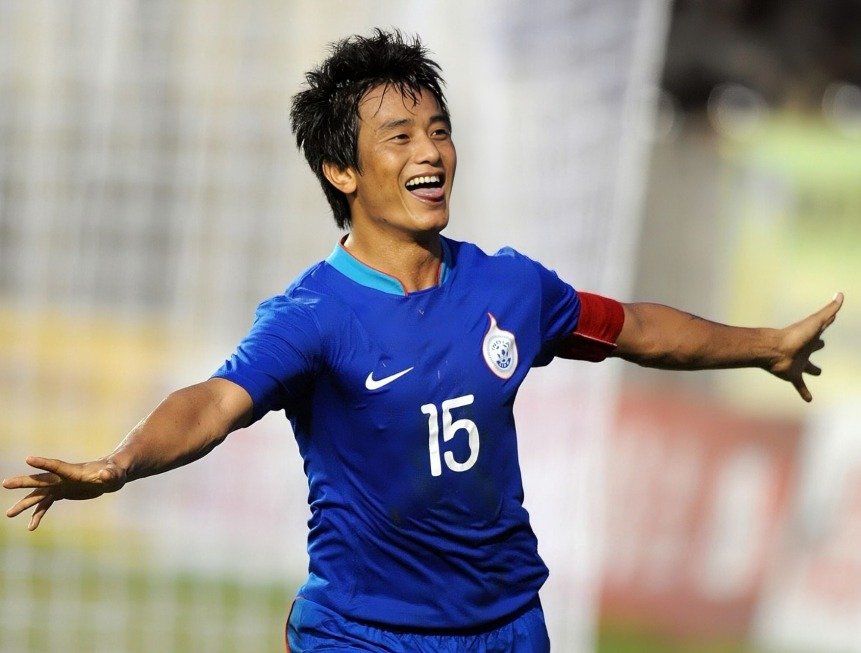
Bhaichung Bhutia became one of the most influential Indian Football Legends Who Shaped the Sport in the modern era. His goalscoring, leadership and success helped bring greater attention to Indian football internationally.
His pace, movement and finishing made him a major threat for the national team, while his success abroad helped demonstrate that Indian players could compete outside the country.
Bhutia is also part of the elite group of Indian footballers honoured with the Padma Shri.
5. I.M. Vijayan
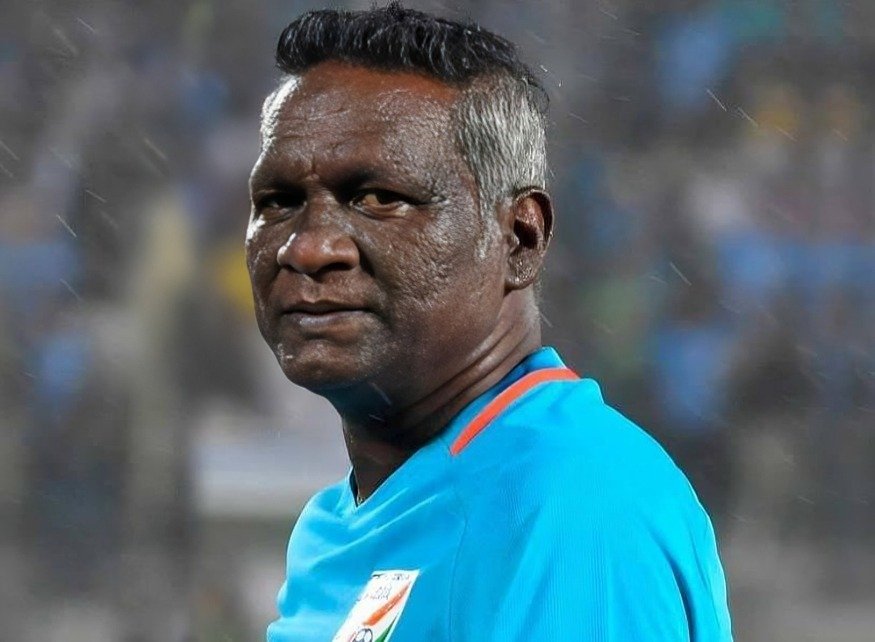
I.M. Vijayan is one of the most naturally gifted Indian Football Legends Who Shaped the Sport, known for his pace, technique and finishing. His three AIFF Player of the Year awards underline his importance to Indian football.
Vijayan was named AIFF Player of the Year three times—in 1992, 1997 and 2000. He also scored India’s fastest international hat-trick against Pakistan at the 1999 South Asian Games.
His performances helped make him one of the most exciting attacking players of his generation.
6. Tulsidas Balaram
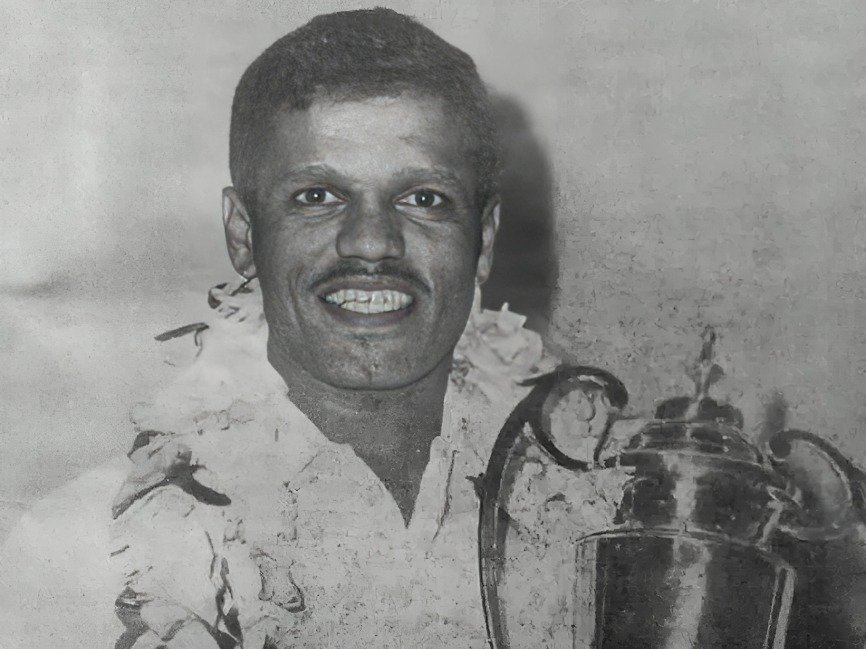
Tulsidas Balaram was a key member of the Indian Football Legends Who Shaped the Sport, forming part of India’s famous attacking trio alongside P.K. Banerjee and Chuni Goswami.
Balaram represented India at the 1956 and 1960 Olympics and the 1958 and 1962 Asian Games. He also played an important role in India’s 1962 Asian Games gold-medal campaign.
His technical ability and intelligent movement made him one of India’s most respected forwards.
7. Jarnail Singh
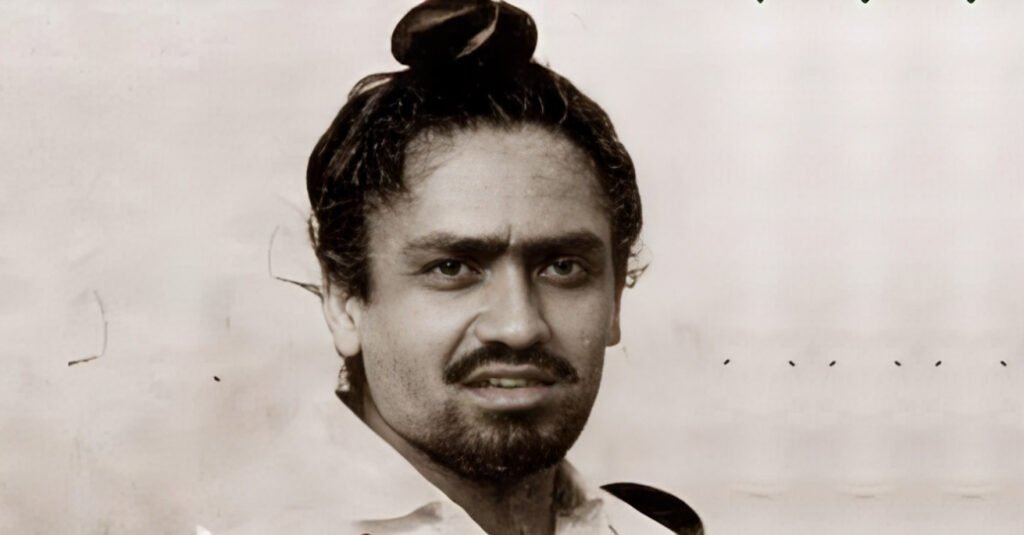
Jarnail Singh earned his place among the Indian Football Legends Who Shaped the Sport through his fearless defending and leadership. He famously scored in India’s 1962 Asian Games final victory over South Korea.
His most memorable achievement came in the 1962 Asian Games final, when he scored India’s second goal against South Korea to help secure the 2–1 victory.
Singh’s leadership and defensive strength made him one of India’s most important players during the country’s greatest footballing period.
8. Sailen Manna
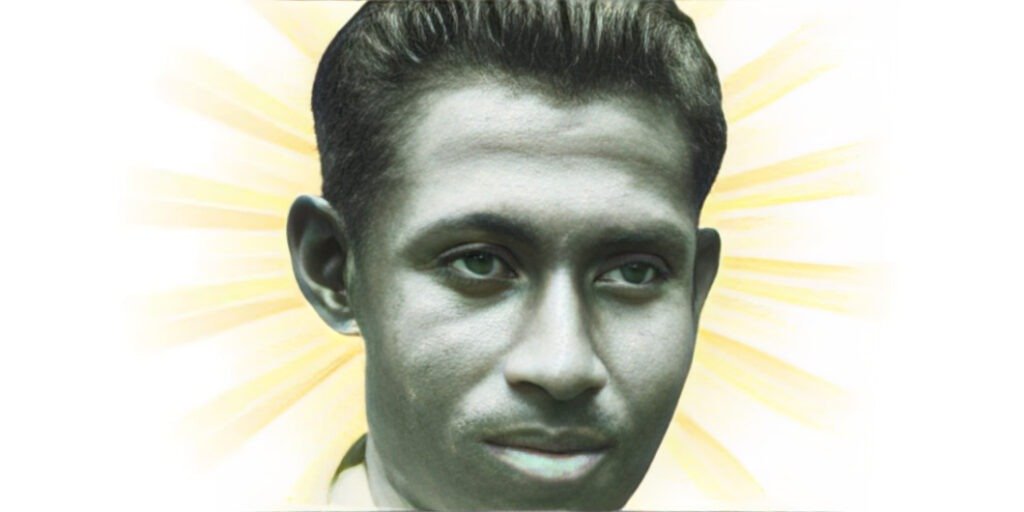
Sailen Manna was one of the earliest Indian Football Legends Who Shaped the Sport, serving as a respected defender and captain during India’s formative international years. He captained the team that won the 1951 Asian Games gold medal.
Manna was also one of the first Indian footballers to receive major national recognition. AIFF lists him among the Indian footballers honoured with the Padma Shri.
His leadership helped establish the foundations on which later generations of Indian footballers built.
9. Gostha Paul
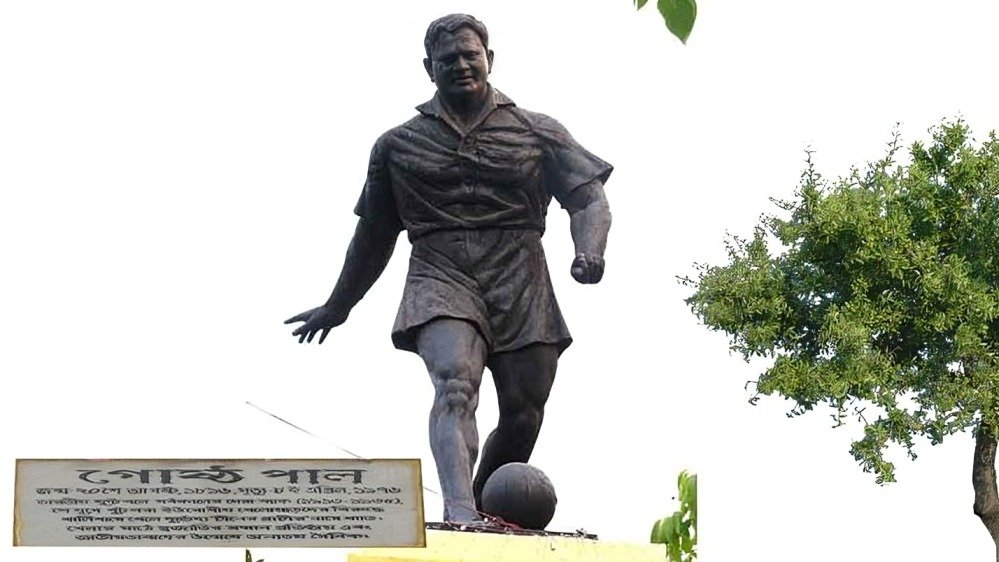
Gostha Paul was a pioneering figure among the Indian Football Legends Who Shaped the Sport, helping establish Indian football during its early development. His legacy remains an important part of the country’s football history.
His historical importance is reflected in his place among the Indian footballers who received the Padma Shri. AIFF identifies him alongside legends such as Sailen Manna, Chuni Goswami and P.K. Banerjee.
Paul’s legacy demonstrates that Indian football’s history began long before the modern professional era.
10. Oinam Bembem Devi

Oinam Bembem Devi is one of the most important Indian Football Legends Who Shaped the Sport, particularly in women’s football. Her career helped inspire generations of Indian girls to take up the game and contributed significantly to the growth of women’s football. Known as the “Durga of Indian Football,” she became the first Indian woman footballer to receive the Padma Shri.
Her career helped raise the profile of women’s football in India and inspired young girls to take up the sport.
Bembem’s inclusion is important because Indian football’s history cannot be complete without recognizing the players who helped develop the women’s game.
Indian Football in 2026
Indian football continues to develop, with both the men’s and women’s teams remaining active on the international stage. AIFF’s current coverage includes India’s women’s U20 team competing internationally in 2026, showing the continued development of the next generation.
The modern game is very different from the era of P.K. Banerjee and Chuni Goswami, but their achievements continue to provide the foundation for today’s players.
Conclusion
The Top 10 Indian Football Legends Who Shaped the Sport represent more than a collection of famous names. They cover almost a century of Indian football, from pioneering figures such as Gostha Paul and Sailen Manna to the golden generation of P.K. Banerjee, Chuni Goswami, Tulsidas Balaram and Jarnail Singh, and finally modern icons such as Bhaichung Bhutia, I.M. Vijayan, Bembem Devi and Sunil Chhetri.
India’s 1962 Asian Games gold remains one of the country’s greatest football achievements, while the 1956 Olympic fourth-place finish and 1964 Asian Cup runners-up finish remain important milestones.
These legends helped shape the sport, inspire future generations and create the history that Indian football continues to build upon in 2026.
SEE MORE: