
Pakistan’s decision to boycott its high-profile clash against India has added a major political twist to the T20 World Cup, with Prime Minister Shehbaz Sharif calling the move a “considered stance” taken in support of Bangladesh. The controversy has sparked strong reactions from the ICC, sponsors, and cricket fans worldwide, turning the T20 World Cup into more than just an on-field battle this year.
Pakistan Government Backs Boycott Decision
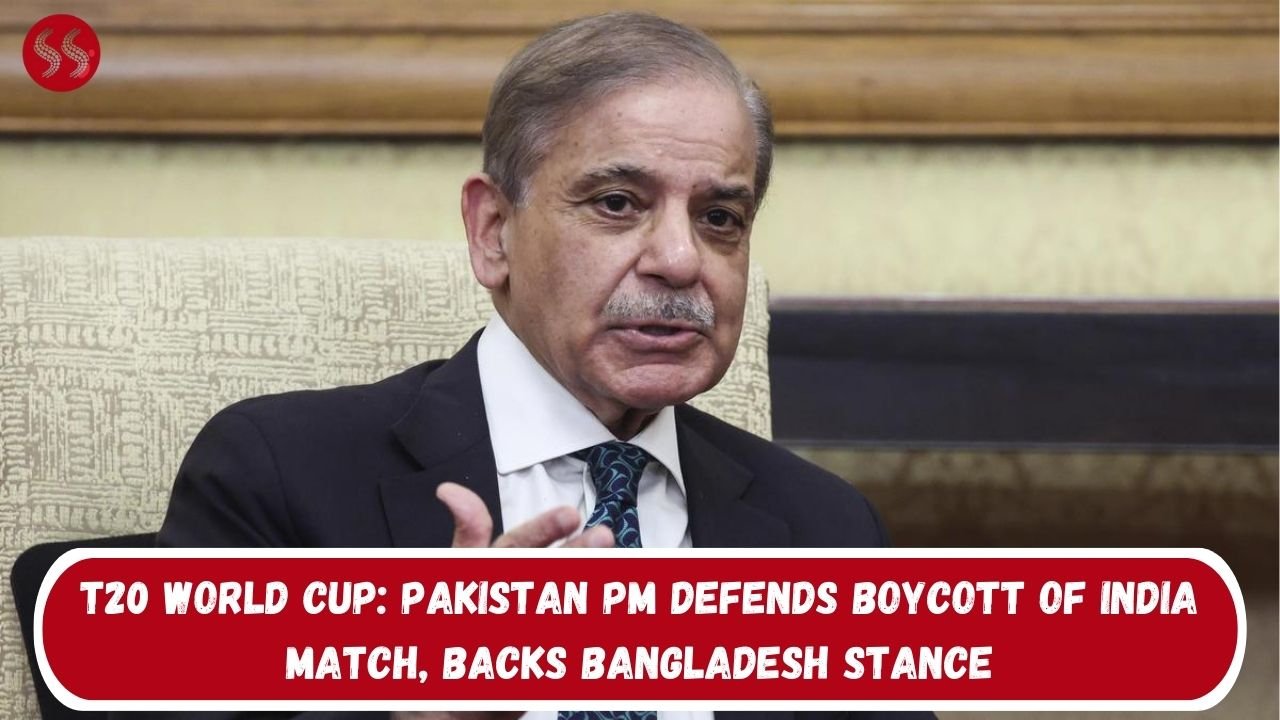
Speaking after a government meeting, Prime Minister Shehbaz Sharif defended Pakistan’s refusal to play India in the T20 World Cup, describing it as an “appropriate decision” rooted in principle. He emphasized that sports should remain free from political pressure, while reiterating Pakistan’s solidarity with Bangladesh, which declined to play its matches in India due to security concerns.
The boycott follows Bangladesh being replaced by Scotland in the T20 World Cup after Dhaka’s refusal to tour India. Pakistan’s government subsequently advised its team to skip the February 15 fixture in Colombo, a directive the Pakistan Cricket Board has publicly supported, even if it leads to future complications.
ICC Warning and Commercial Concerns
The International Cricket Council has reacted sharply to the situation, warning the PCB of “serious consequences” if Pakistan fails to honor its T20 World Cup fixture against India. The India–Pakistan encounter is considered one of the biggest revenue drivers of the T20 World Cup, attracting massive global viewership, sponsorships, and broadcast deals.
In an official communication, the ICC urged Pakistan to consider the long-term impact of its decision, stressing that any disruption could affect the wider cricket ecosystem. The governing body hopes the PCB will reflect on how repeated absences may influence Pakistan’s future standing in ICC events.
Team Focuses on Matches Ahead
Despite the controversy surrounding the T20 World Cup, Pakistan’s squad has arrived in Colombo and is preparing for its remaining preliminary fixtures. The team opens its campaign against the Netherlands on February 7, with players instructed to stay focused on cricketing duties.
The PCB has confirmed it will continue to follow government guidance throughout the T20 World Cup, even if a potential India rematch arises in the knockout stages. As tensions linger, the tournament faces ongoing uncertainty, highlighting how geopolitics continues to cast a long shadow over the T20 World Cup.
SEE MORE: