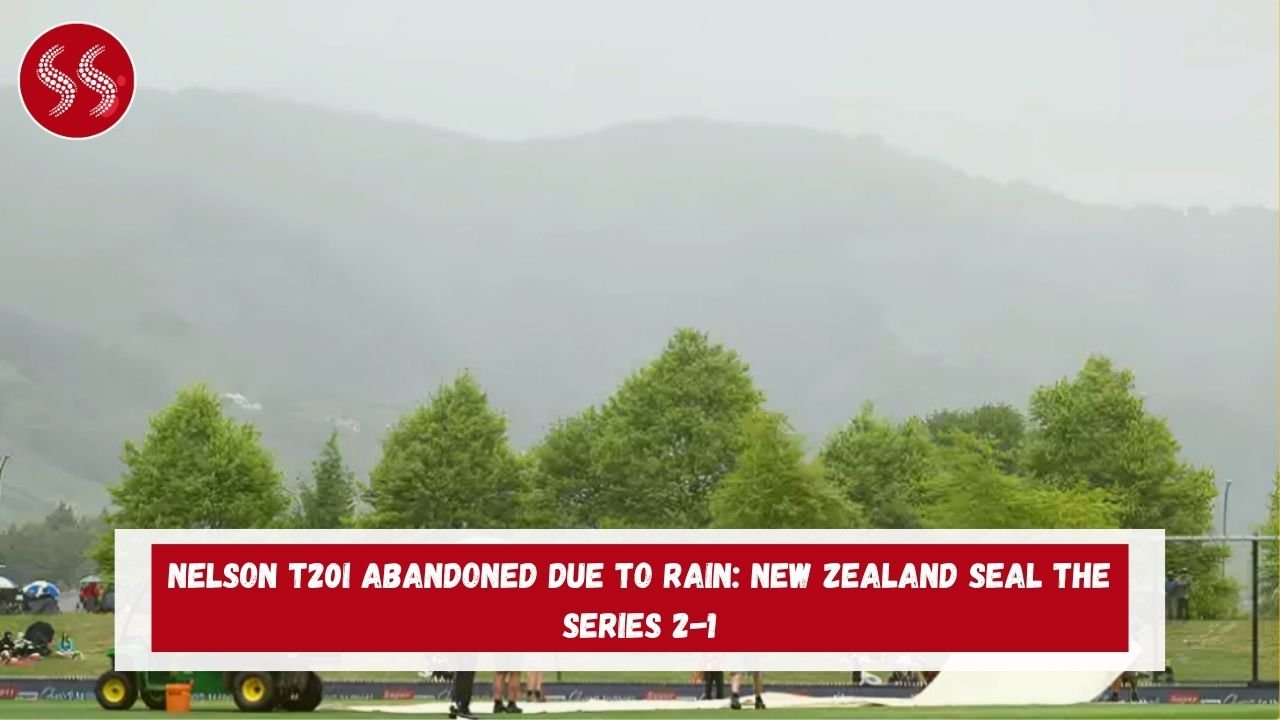

The fourth T20 International between New Zealand and West Indies ended in disappointment as heavy showers forced the game to be called off early at the Saxton Oval in Nelson. With this result, Nelson T20I abandoned due to rain gave New Zealand an unassailable 2-1 lead in the five-match series, with one game left to play.
Rain once again proved to be the deciding factor, overshadowing what could have been another thrilling contest between the two sides. The players, fans, and officials waited patiently, but persistent rainfall left no room for play to resume.
Rain Spoils the Fourth T20I in Nelson
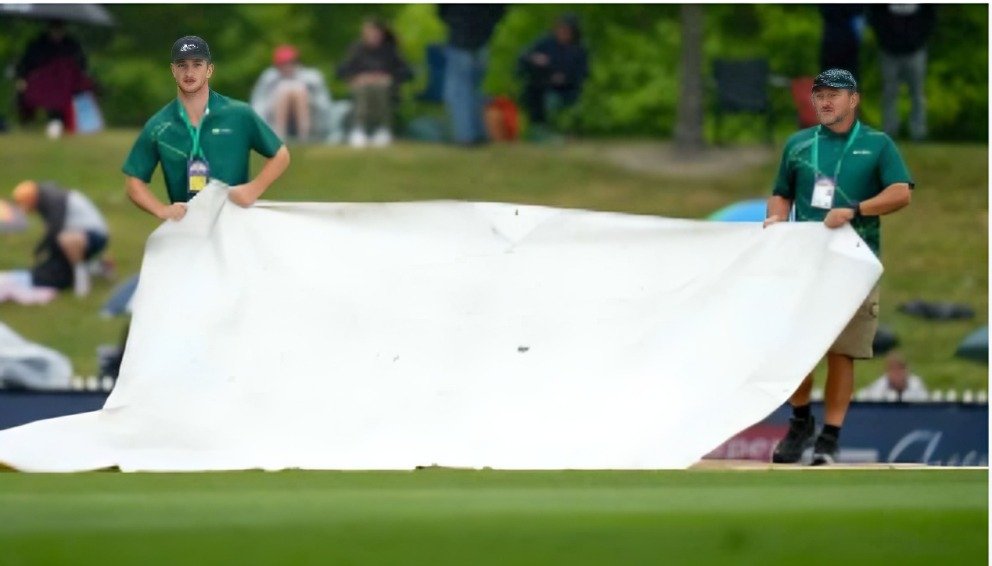
The Nelson T20I abandoned due to rain just after 39 balls of play, leaving spectators disappointed. West Indies were sent in to bat after New Zealand captain Mitchell Santner won the toss and chose to field first.
The game began under overcast skies, and after just two deliveries, light drizzle started to fall. Despite the early interruption, play continued for a while. West Indies openers Amir Jangoo and Alick Athanaze tried to build a steady start.
Athanaze looked in good touch as he struck a four and a six off Kyle Jamieson to get the innings going. He followed it up with another big shot, bringing some momentum for the visitors. Jangoo also joined in with a boundary towards the end of the fifth over before the first rain delay stopped the action.
After about a 30-minute break, the players returned to the field with no overs lost. However, the comeback was short-lived. Within two deliveries of resumption, James Neesham dismissed Athanaze for 21 runs. An over later, the rain came down heavily again. This time, the downpour was relentless, and the umpires had no choice but to call off the match.
The Nelson T20I abandoned due to rain became the talk of the evening, as the conditions showed no sign of improvement. With the ground too wet for play, match officials officially declared the game a washout.
New Zealand Clinch the Series 2-1 Despite Washout
Thanks to the Nelson T20I abandoned due to rain, New Zealand now lead the series 2-1 with one game remaining. The result means that even if West Indies win the final match, they cannot level the series.
New Zealand had earlier won the first two T20Is convincingly before the visitors bounced back in the third. The fourth match was expected to be crucial for West Indies to stay alive in the series, but the weather had other plans.
The Nelson T20I abandoned due to rain came as a blow to the West Indies’ chances of a comeback. Their batting lineup showed promise early on, with Athanaze’s aggressive stroke play standing out. However, the rain ruined their rhythm and denied them a chance to post a competitive total.
On the other hand, New Zealand were clinical in the few overs bowled. Neesham’s early wicket showed their intent to finish the series strongly. Despite limited play, the home side maintained control and displayed a balanced approach in the field.
This Nelson T20I abandoned due to rain also highlighted the challenges teams face during New Zealand’s unpredictable weather conditions. The Saxton Oval, known for its scenic surroundings, was soaked throughout the evening, making any further play impossible.
As the teams now move to Dunedin for the fifth and final T20I on November 13, fans will hope for clear skies and a full match to conclude what has been a rain-affected series. The Nelson T20I abandoned due to rain will remain a reminder of how unpredictable nature can be, even in crucial international contests.
Brief Scores:
West Indies: 38/1 in 6.3 overs (Alick Athanaze 21, Amir Jangoo 12*; James Neesham 1-5)
Result: Nelson T20I abandoned due to rain – Match washed out.
In summary, the Nelson T20I abandoned due to rain not only denied fans an exciting contest but also confirmed New Zealand’s series win. While cricket lovers were left unsatisfied, the Kiwis can celebrate their dominance, and the Caribbean side will look to salvage pride in the final game. The Nelson T20I abandoned due to rain will go down as another frustrating chapter in a series interrupted by unpredictable weather.
SEE MORE: